
We DON’T Need Another ‘Hero’.
we need ‘Survivors’.
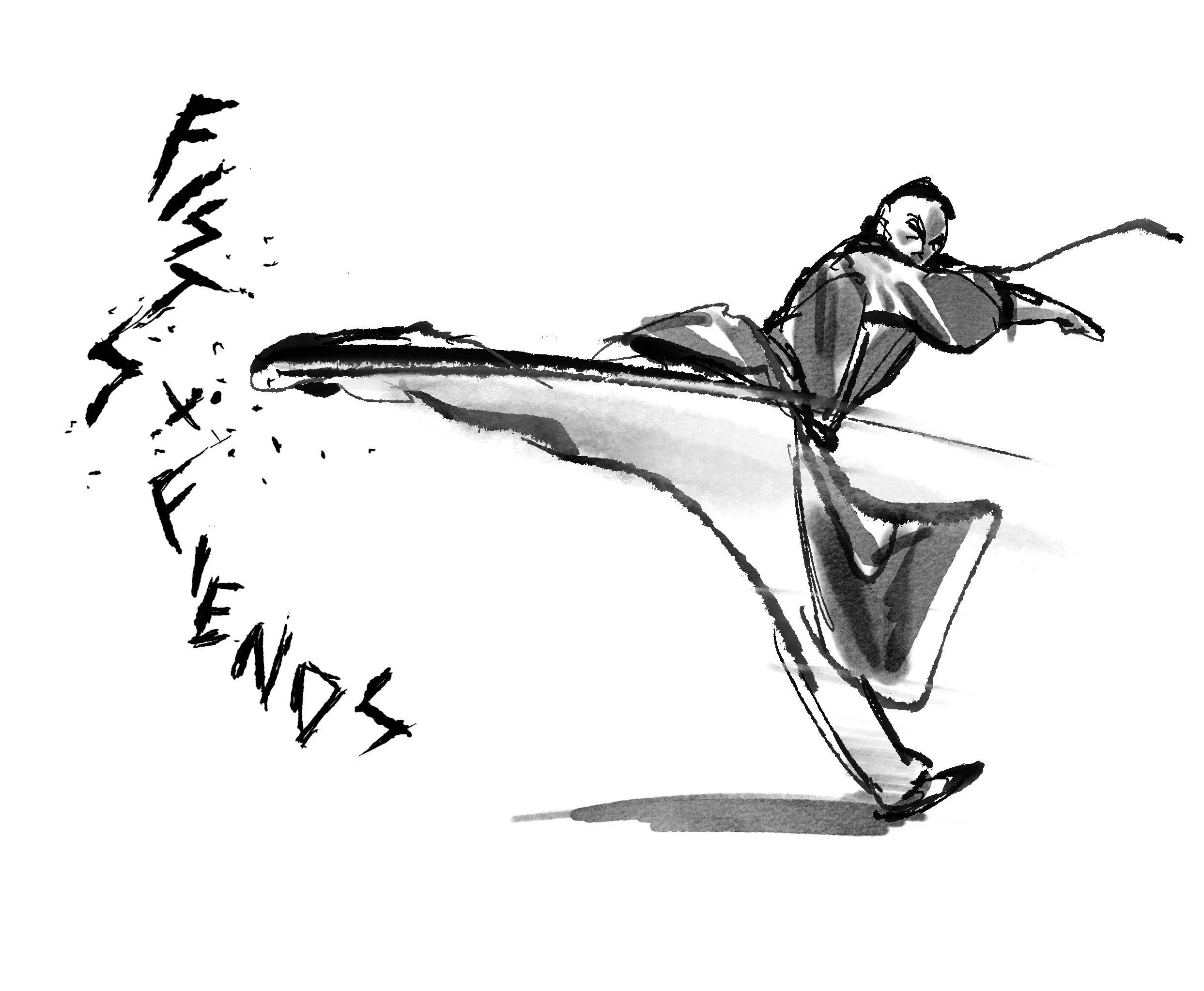
Side Kick - by Steven Wu
Yesterday was another playtest session of the upcoming sequel campaign to The Silt Road. The mission, which I will not spoil, resulted in success, but there have been several back-to-back sessions as of late that ended with, ‘Total Party Kills’ (TPK). The logical question to ask as the designer is — ‘Are my missions too hard?’ Certainly a reasonable deduction, and one that I take seriously after each catastrophic outcome.
The goal is to create stress, agency, tension, and get players to feel that every choice matters, but not wipe them out every time we play. I’ll explain this more as we go, but after careful examination of these calamities, it became apparent that there were very real and manageable reasons for these ruinous adventures to result in death. Which is significant, because every character's death matters in Fists & Fiends, and is never to be taken lightly. Here’s why:
108 Souls As A Resource.
The Silt Road campaign is designed to accomplish several objectives: 1) train Gamemasters how to run Fists & Fiends mission types while telling a story for your players, 2) build a setting and environment to challenge you the player and test your character’s mettle, 3) set a tone of agency and tension in almost every decision you make, 4) provide limited resources and low magic to enforce agency, 5) provide an atmosphere where player characters are ‘survivors’, not ‘heroes’. Meaning, the world exists with, or without your character, and it cares little whether or not your boxers survive, or even exist in the first place. If you grow strong enough, perhaps you can move the needle and make your presence known. Perhaps you can survive to pass on your knowledge to the next generation. You’ll have to find out.
Resource management is an integral part of the campaign. Kicking off with your boxers having to venture out into the world for the first time since the floods to get a much needed resource right out of the gate – (wood). This immediately sets the tone that your characters efforts will help determine the survival of the 108.
In addition to wood, ammunition, powder, torches, looking glasses, are all needs, not wants. A simple rusty dagger, or a discarded crossbow bolt for a crossbow are treasures to be coveted; without the need for a +X in front or after the name. However, the single most valuable resource in the game is – ‘lives’.
There are only 108 survivors in your group, each time one of you dies there are now -1 survivors, and thereby one less character that can be created for future missions in the campaign. Skirmish missions place further taxes on the system, and pressure the players by thrusting one of their group into the role of Commander. The Commander leads not only the players, but a larger force of NPCs as the battle rages on around you. Bad rolls during the Battle Phases (Commander vs Commander) can result in mass casualties, further diminishing your pool of available boxers. This places more weight on the survival of each and every character in the game.
In the follow-up campaign that we are currently playtesting, this is even more significant as the numbers have dwindled and players begin to feel the tension as if the oxygen is being sucked out of the room. If the colony collapses, game over, start over.
The Bones Rule the Road. Choose wisely.
Given the value of each life in the game we can see the cause for concern when multiple missions end in TPKs. Upon closer inspection the cause of each and every one of these came down to two main factors - 1) poor insertion rolls (affected by character skills) which started the mission off on a bad foot and 2) some less than optimal decisions and subsequent rolls resulting in the Doom Spiral.
While a character's background can become a significant factor in augmenting the value of each boxer, Skills assignments for each character can make or break a situation to include but not limited to combat. When building out a character there are some skills that will be helpful to increase, even if it is a level 1. This can assist your team in stopping the Doom Spiral before it starts.
What is the doom spiral and how do you stop it?
In Fists & Fiends we have six mission types to help the gamemaster drop players into the action as quickly as possible with a story hook as to when, where, why you find yourself where you are. These range from skirmish missions, to infiltration, to security, and more.
A majority of these mission types have an ‘Insertion Roll’ that determines how bad, or good, the current situation is for the players at the outset of the fight. In other words, how intense is the pucker-factor when the scene opens?
Each of these mission types with their accompanying Insertion Roll requires a particular skill set for the mission leader, and no single character can be competent at all of these roles. The importance of the team, and having characters that complement one another is front and center from mission to mission.
The Trip Into Hell
The Doom Spiral is when one of these rolls goes bad for the player, e.g. rolling 0 or 1 successes. This sets off a chain reaction where the onset of the mission is so dire it is near impossible for your boxers to get out alive. Once the players are able to launch their own attacks, a few failed rolls can spell out D-O-O-M for the rest of the mission.
Dice are still that element that cannot be controlled, and while there are no guarantees, with a dice pool system the more dice the better the odds that you will find success. Obviously every player wants to maximize the fighting skills of their character to increase the likelihood of success, so during the build phase some of the other skills necessary for our boxers to survive The Silt Road, get left by the wayside. And here-in lies the fatal flaw from inception.
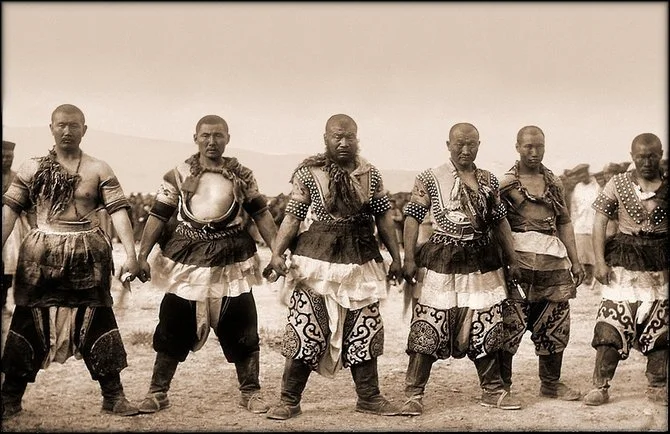
Strongmen. 1909. Photographer unknown.
The Hook
As one example of this, your squad has been tasked with infiltrating a building in the heart of the city where two of the 108 survivors are being held captive after their mission went sideways. You attempt to break in undetected and set them free. However, your group lacks anyone with ample skill levels in Stealth to have a fair chance at this mission. The player character reluctantly chosen as the Shadowmaster performs the insertion roll and gets 0 successes.
Rather than starting the mission successfully gaining entry to the building undetected, the players find their characters in the middle of an ambush. AMBUSH allows each of the attackers a Free Action before initiative is drawn. You can see how this is a bad way to begin, and it was mostly preventable.
With one character being proficient in Stealth (level 2 or 3), they get two or three additional dice on their roll. If one or more other characters have at least a skill level of 1 in Stealth, they can also help the Shadowmaster run the mission. Translation: the Shadowmaster rolls extra dice thus increasing the probability of success.
GAME THE SYSTEM: 108 ADVANTAGES & THE ANTI-HERO APPROACH
Something we came up with recently that helps avoid the catastrophic insertion on a mission, is to have several characters ready to play each with different skill focuses. One can be built for Recon missions, while another might be better suited as an Escort-Master. This is the anti-hero approach, and focuses on survival of the entire band of flood refuges turned boxers, rather than a single character being the hero of the story.
While this approach can slow down progression of your favorite character, it can help increase their chances of living long enough to reach those highly sought after upper levels. Rather than being slated for missions they are ill-suited for, that end in their rapid and sometimes epic demise, they stick to missions they are better equipped to handle.
THERE CANNOT ‘BE ONLY ONE’
Instead of square-peg vs round-hole, you’re picking the right person for the job. Trading out the ‘hero’ mentality for the big picture of having 108 fighters to choose from, and someone in that mix better qualified for the task at hand. Placing ourselves in the scene, this makes a bit more sense. Why would a group of survivors pick the people for a mission who have the least likelihood of success? Why would they hinge their survival on the biggest risk, rather than choose those best suited? Survival of the colony trumps any individual boxer, and using various characters when necessary can mean the difference of survival and death.
SKILLS PREVENT SPILLS
A final tip is, let the Skills of your character determine what you would do in their shoes (role-play), rather than come up with an amazing idea as a player, but your character(s) are deficient at that Skill, which will most likely cause disastrous outcomes if followed through with. After they rewrote their plan to suit their Skills, this approach saved the characters in yesterday’s mission. While they abandoned their excellent plan, none of their characters were likely to succeed at it.
While laying out an ambush, in which they needed to attract the attention of some local armed militia while being unarmed themselves, they initially planned to coerce the guards into believing someone was wounded in the alley, where they would spring their trap. The militia in this scenario would likely not about the victim first of all, but second and more importantly, none of the characters on the mission had any skill in Communication, and were low in WIT on top of that. The best possible roll was 2 dice.
After coaching them to consider other options better suited to their skills, they came up with an alternate plan — one of them throwing rocks at the guards from the alley while the others hid in wait. Once the guards chased the brazen rock hurler further down the alley, the others would pounce. The crafty lobber had skills in Accuracy, as well as a high Sleight attribute. This resulted in rolling 7 dice instead of 2, and ultimately led to their success of not only luring the armed militiamen into the trap, and pulling off the ambush, but damaging one of the militiamen with the rock before the fight even kicked off.
Mission accomplished!
